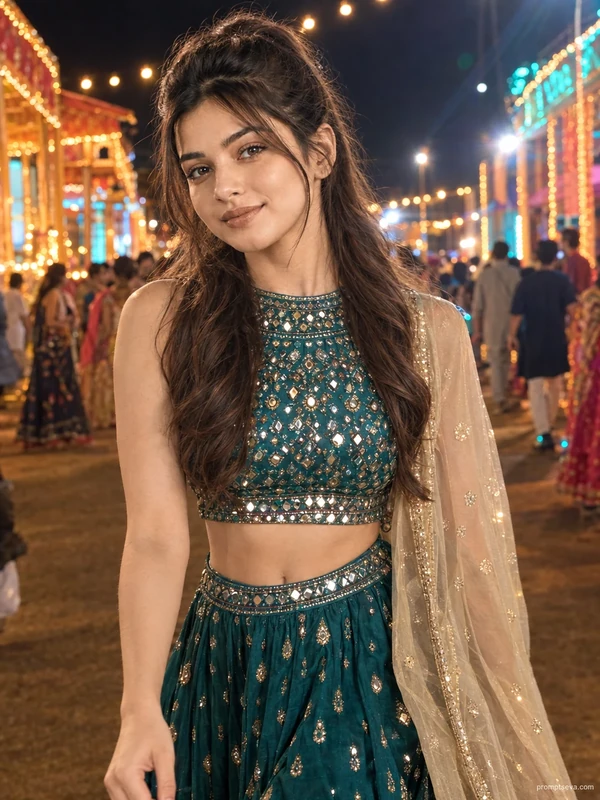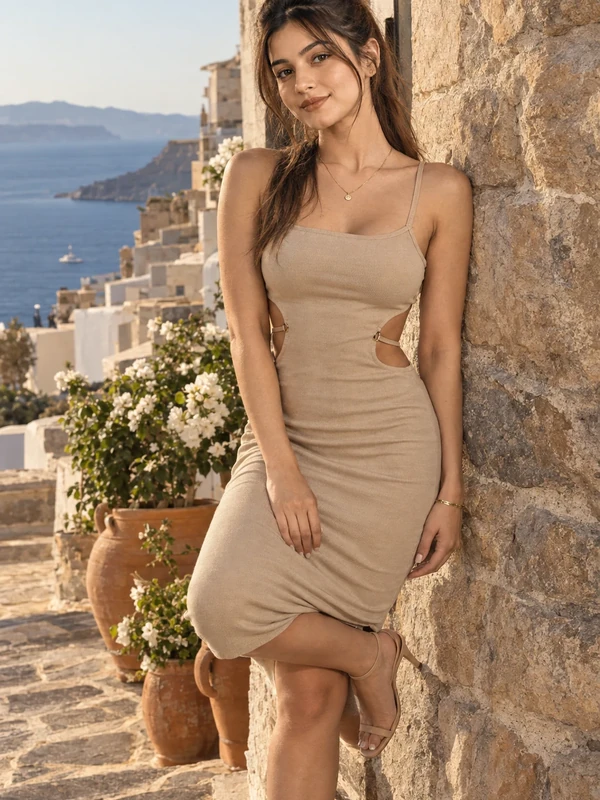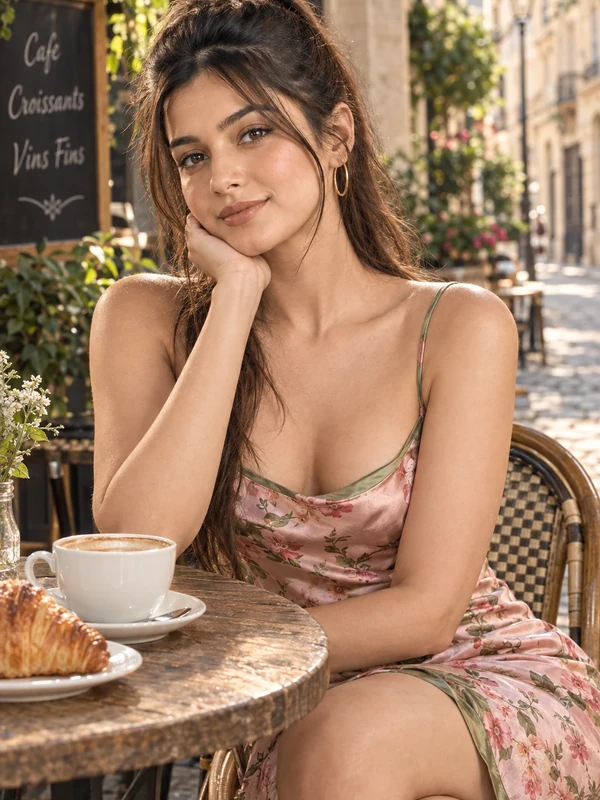

The window-light shadow effect — those geometric stripes of light and dark cast across a face and background — is a classic film noir lighting trick, and it's notoriously fiddly to get right without real studio equipment. This prompt reproduces it in a single generation, paired with a fitted turtleneck and a poised three-quarter profile.
What this prompt creates
This produces a waist-up, black-and-white studio portrait in a 4:5 aspect ratio. The subject is positioned in a three-quarter profile facing left, head gently turned back toward the camera, wearing a fitted black high-neck turtleneck sweater and a clean low bun. The defining feature of this prompt is the lighting: a strong directional key light from the left casts smooth shadow falloff across the right side of the face and torso, and a geometric shadow pattern — mimicking light through window blinds — falls across the gray studio backdrop. The prompt is careful to specify "no crushed blacks" and "no overexposure," which keeps the high-contrast lighting from swallowing facial detail, a common failure point in dramatic black-and-white lighting setups. Because the prompt opens by restricting the model to the uploaded photo as the only face reference, identity stays locked even with the dramatic side lighting.
How to use this photo prompt
1. Copy the entire prompt, including the negative prompt at the end. 2. Open a new chat in ChatGPT or Gemini. 3. Upload a clear, evenly-lit photo of your face. 4. Paste the prompt and send it. 5. If the window-shadow pattern is too faint or the shadows feel too harsh over the eyes, regenerate once or twice — the negative prompt already guards against harsh shadow covering the eyes, but a second pass often balances it better.
Tips for a better result
- Use a reference photo with clear, even lighting so the tool has a solid base before applying the dramatic key light.
- If the geometric shadow pattern on the background is too subtle, add "stronger, clearly visible window-blind shadow pattern" and regenerate.
- Try flipping the key light direction ("from the right side" instead of left) if you prefer the shadow on the opposite side of the face.
- Keep the "no crushed blacks" instruction in place — it's what prevents the shadow side of the face from losing all detail.
- Since the final portrait is fully monochrome, your sweater's actual color doesn't matter.
- Generate at least twice; the exact shadow pattern and head angle shift slightly each time.
Who this prompt suits
A great option for girls and women who want a timeless, editorial-quality black-and-white portrait with real photographic drama — well suited to a profile picture, a portfolio shot, or a print worth framing.
More prompts like this
Explore more in the Girls category and the Black and White category, including the Color Splash Profile Portrait and the Concrete Wall Lean Portrait. You may also like the Terracotta Halter Dress Portrait, the Ivory Midi Dress Portrait, and the Sage Linen Beach Rock Portrait. Browse the full Prompts for Girls collection or return to the PromptSeva homepage.
What makes this style work
The geometric shadow pattern is the signature move here — naming "window-light effect" specifically, rather than just "dramatic lighting," tells the model exactly what kind of shadow shape to cast, a technique borrowed straight from classic film noir cinematography. The explicit "no crushed blacks" and "no overexposure" instructions protect facial detail from being lost to the high contrast, which is a common risk whenever a prompt calls for strong directional lighting. And the negative prompt closes the loop by ruling out harsh shadow over the eyes specifically — a targeted fix rather than a generic quality list. When writing your own dramatic-lighting prompts, pair every strong lighting instruction with an explicit guardrail against losing detail in the shadows.