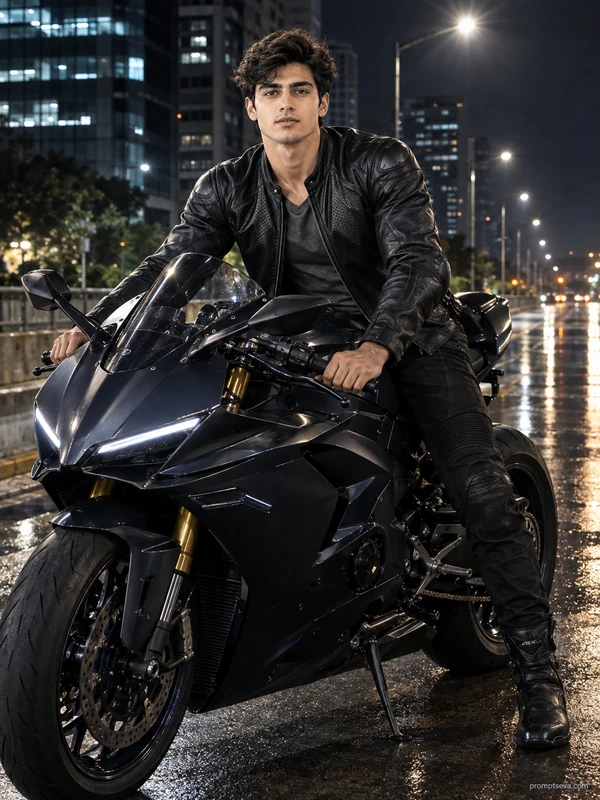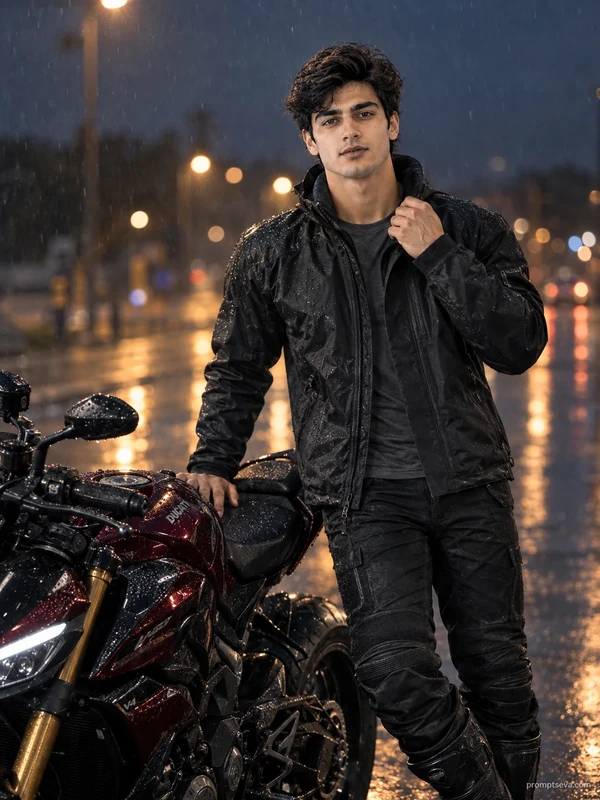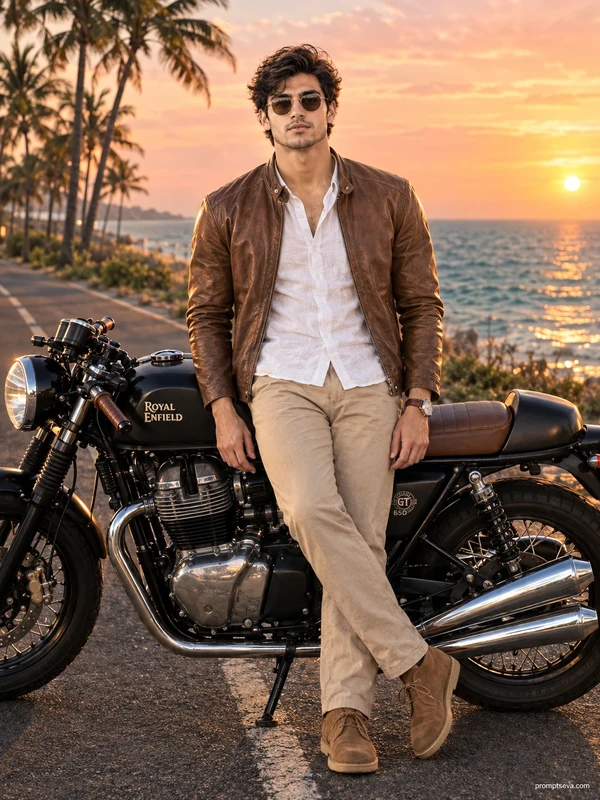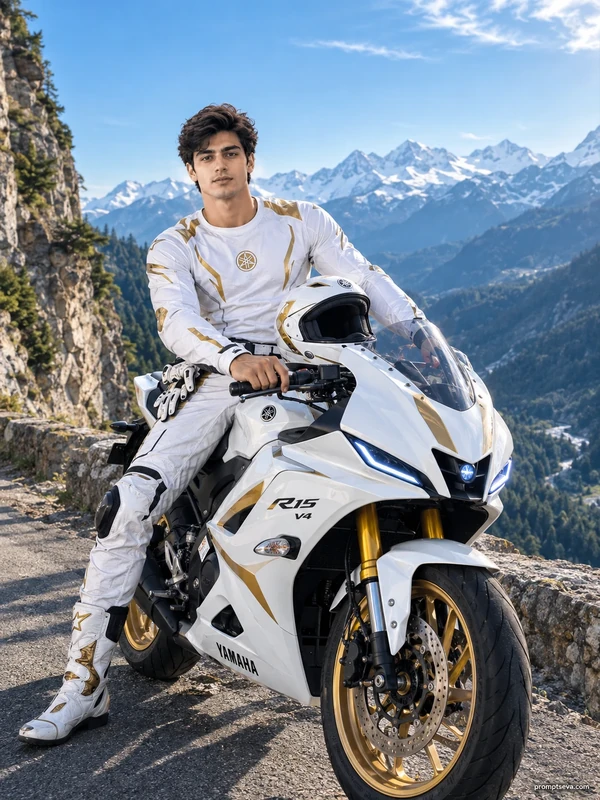
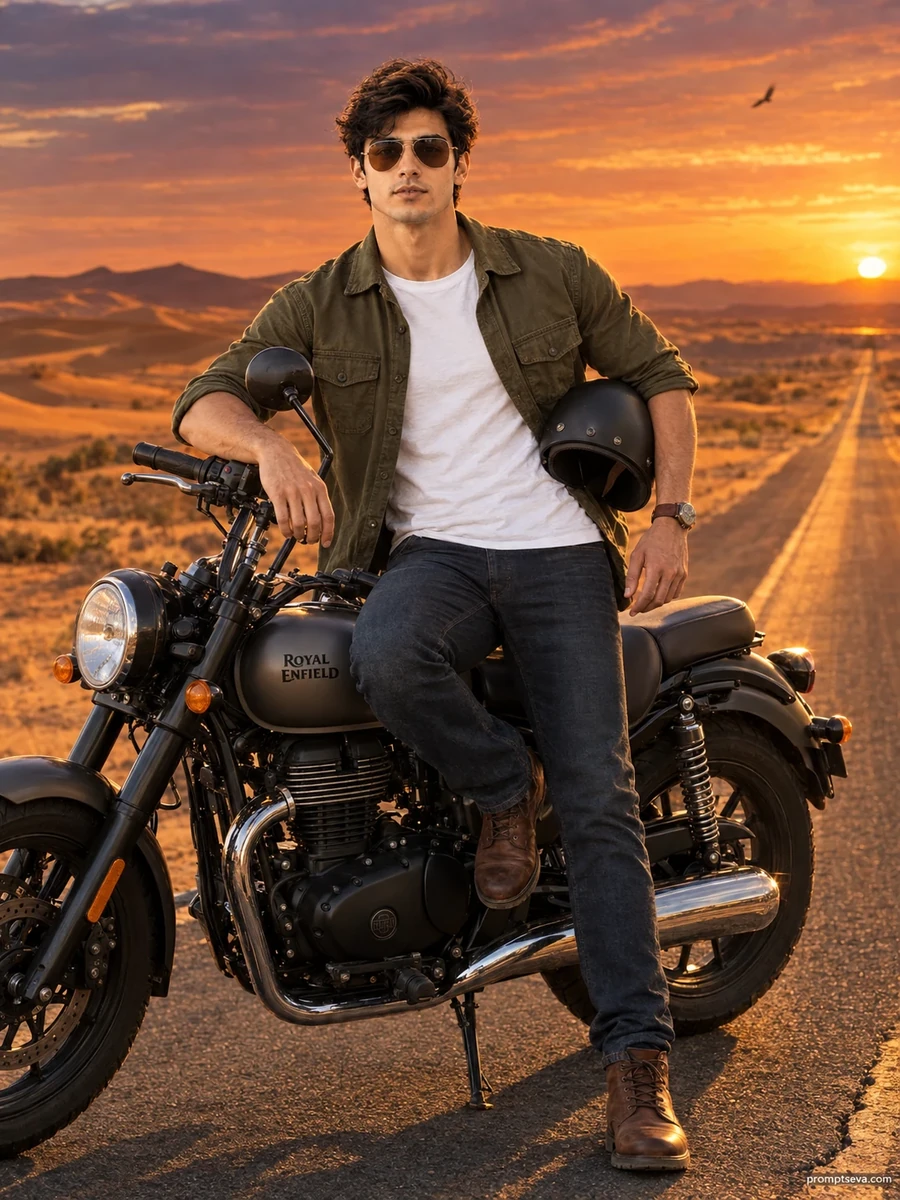
This prompt is going for a specific, recognizable genre — the kind of luxury motorcycle portrait you see in automotive magazine spreads, not a casual bike selfie. A matte gunmetal Royal Enfield Meteor 350 on a Rajasthan desert highway at golden hour, sand dunes glowing like copper, the subject in an olive military-style overshirt with a helmet tucked under one arm and aviator sunglasses catching the light.
What separates this from the earlier desert prompt in the men's collection is the intensity of the identity-lock language — "zero alteration in ultra-HD detail," no reshaping, no identity drift, stated almost redundantly across multiple sentences. That repetition isn't accidental. Luxury, editorial-style scenes like this one seem to pull AI models toward over-polishing a face more than casual scenes do, probably because the whole aesthetic is already built around looking flawless, so the model's instinct to "improve" things kicks in harder here.
The golden hour lighting described — hard directional light from one side, long warm shadows — is genuinely difficult to get exactly right, and it's common for a first attempt to come out either too soft or too harsh. If the shadows look flat, ask for "stronger directional light, more contrast between the lit and shadowed side of the face" rather than repeating the full lighting description again.
This is a strong pick if you want something that reads as genuinely premium rather than casual — works well for a personal brand shoot, a standout profile photo, or just the most visually ambitious option if you're comparing it against the other four in this luxury set. It's overkill if you just want a quick, casual bike photo; the simpler prompts in the men's or boys' collections will get there faster with less to double-check.
One thing worth watching specifically in this prompt: the windswept hair and cleanly shaped beard details. Wind-blown hair is one of those things that can look either genuinely natural or slightly artificial depending on how the model handles the strand-level detail, so it's worth a closer look before deciding the image is done.
The helmet-tucked-under-one-arm prop deserves its own check too, the same way it does in the forest highway prompt over in the men's collection. It's a small piece of physical business, and physical business — an object resting against the body with real weight and contact — is exactly the kind of detail that AI models sometimes render as slightly floating rather than genuinely held. If the helmet looks like it's hovering near the ribcage instead of pressed against it, "adjust so the helmet is clearly resting against his side with natural weight" is a cleaner fix than re-describing the whole stance.
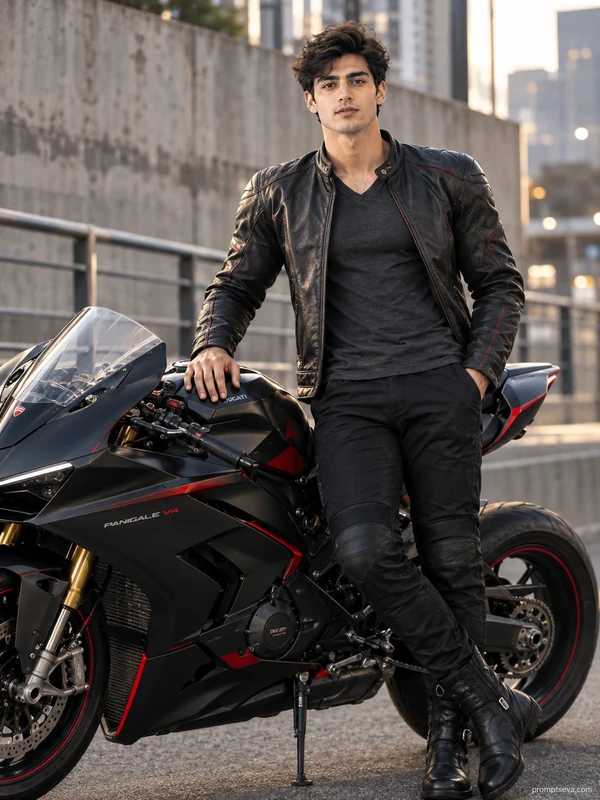
Worth comparing this against the Ducati garage prompt later in the collection too, since both are going for a similarly premium, editorial mood but through almost opposite environments — one wide open desert with dramatic natural light, one a tightly controlled indoor space with engineered lighting. If you're deciding which to generate first as a test of a given AI tool's range, running both back to back is a genuinely useful way to see whether a tool that handles one well also handles the other, since the lighting logic in each is different enough that strength in one doesn't guarantee strength in the other.
It's also worth thinking about the sand dune color specifically — "glowing like copper" is a fairly specific and demanding color instruction, closer to a metallic warm orange than a standard golden-hour yellow. If the dunes render as a flatter yellow-gold instead of that coppery warmth, a follow-up like "push the dune color warmer and more metallic, closer to copper than standard gold" tends to get you closer to what the prompt is actually describing than a general request for "more golden hour."
If you're planning to generate the full five-prompt luxury set, this desert highway shot is a sensible opener the same way the equivalent prompt works in the men's and boys' collections — it's demanding enough on lighting and identity preservation that a clean result here gives you real confidence going into the calmer, more controlled scenes later, like the garage or coastal sunset prompts. And because the identity-lock language repeats itself so insistently in this particular prompt, it's a good early signal of whether a given AI tool is prone to over-polishing faces in high-drama, golden-hour lighting specifically, which is worth knowing before you commit to generating the rest of the set with that same tool.