
There's a specific kind of confidence in someone leaning against a motorcycle with their arms folded, not looking for a reaction, just standing there. That's the pose this prompt is built around — a guy against a black Royal Enfield Bullet on a pine forest highway, dark green bomber jacket, afternoon shadows stretching long across the road, dappled sunlight coming through the trees above.
The folded-arms stance is doing more work here than it might seem. It's a static, composed pose rather than a walking or seated one, and that stillness is what gives the image its quiet-confidence read. If you want to shift the mood after generating this — more relaxed, more casual — it helps to know the pose itself, not just the outfit, is carrying a lot of that emotional tone.
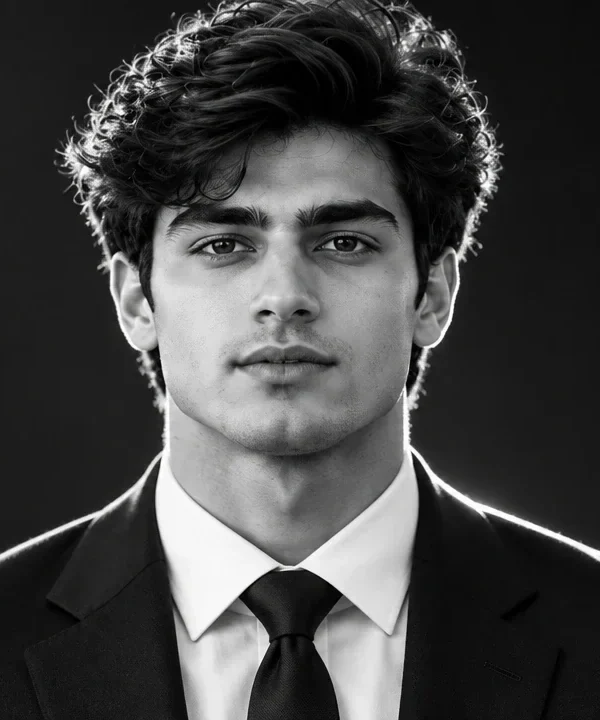
The face-lock language in this one is unusually thorough — same bone structure, same eyes, same brows, same lip shape, nothing altered. Worth taking that seriously and actually checking the result in good lighting rather than glancing at it on a dim phone screen, since dappled forest shadows can make small facial discrepancies easier to miss than they'd be under even light.
This pairs naturally with the Leh Ladakh prompt from earlier in the set — both outdoor, both adventure-adjacent, good combination for a travel-focused set of images. It's a solid middle-ground choice: calmer than the mountain shot, less staged than the fort wall crouch later in this collection.
One thing to watch for — dappled light moving across skin unevenly can sometimes read as inconsistent tone when it's actually just the natural effect of filtered forest light doing its thing. Before assuming something's wrong, compare the lit and shaded patches separately rather than judging the face as a whole under mixed lighting. Worth mentioning too: the bomber jacket's dark green color is doing some quiet work against the forest backdrop, since a jacket too close to the tree color can blend in rather than stand out as a distinct garment. If the jacket reads as blending into the background rather than popping against it, asking for "a slightly deeper, more saturated green that stands apart from the foliage" is a more targeted fix than adjusting the whole color grading.
And if you're building out the full five-image Bullet collection, this is a reasonable prompt to generate roughly in the middle of your session rather than first or last — by the time you get here you'll likely have a good sense of how accurately the tool is holding your face from the more demanding Leh Ladakh prompt, which makes it easier to judge whether any small differences here are meaningful or just normal variation between generations. If the pine forest itself looks a little sparse or repetitive on a first generation, that's worth addressing directly too — "add more varied tree density and natural gaps in the canopy" tends to produce a more convincing forest than simply asking for "more trees," which can sometimes result in an oddly uniform, almost wallpaper-like repetition of the same tree shape across the background.
There's a small technical detail worth understanding in the lighting description too — the prompt calls out "afternoon shadows stretching long across the road," which is a specific time-of-day cue rather than a generic lighting note. Long shadows only happen when the sun sits low, so if the result comes back looking like flat midday light with no real shadow length to it, that's a sign the model latched onto the dappled-forest-light part of the instruction while skipping the low-sun-angle part. Asking for "longer, more defined shadows stretching across the road, consistent with a low afternoon sun" is a more precise fix than just repeating the whole lighting paragraph.
Compared to the Leh Ladakh and city boulevard prompts earlier in this collection, this one sits in an interesting middle spot — not as visually demanding as the mountain shot, but not as simple as the boulevard either, since dappled light and a folded-arms static pose both ask a bit more of the model than flat urban lighting does. If you're working through the set in order, this is a fair one to treat as your first real test of how the tool handles mixed light and shadow before you get to the walking or fort-wall prompts, which push those same skills even further.